IS 19262:2025 Explained: What the Electric Tractor Test Code Measures
A new Indian Standard is easy to announce and harder to read. Most coverage of IS 19262:2025 has repeated the same paragraph from the launch. This post is what we walk manufacturers through when they ask what the code means for their tractor.
For the wider picture, including who tests and when you need a report, start with our electric tractor testing guide.
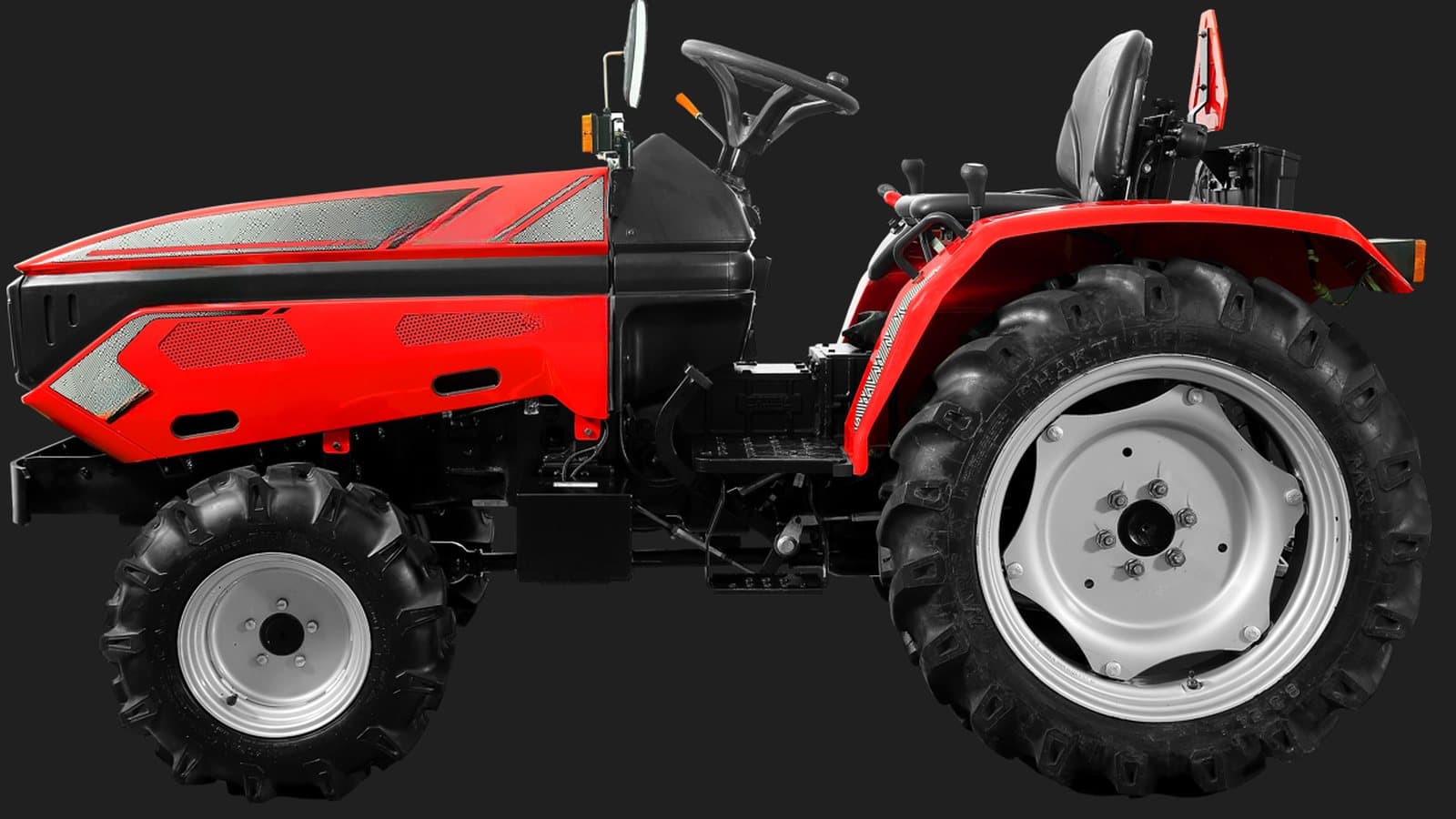
The title tells you what kind of document it is
The full title is Electric Agricultural Tractors — Test Code. In BIS terms, a test code sets out how to measure: terms, conditions, procedures and what to record. It is not a specification that sets the minimum a tractor must achieve.
The PIB release describes it the same way. It establishes "a common understanding among all stakeholders with respect to uniform terminology, general guidelines, and tests to be carried out".[1] It also says the data the code produces "would also assist in the future development of acceptance criteria and conformity assessment schemes specific to electric tractors".[1]
For a manufacturer, that sentence is the most practical one in the release. Today's code standardises the measurement. Electric-tractor pass marks are expected to come later.
The six areas the code covers
| Area | What is measured | Why it matters for an electric tractor |
|---|---|---|
| PTO power | Power delivered at the power take-off | PTO-driven implements such as rotavators are where an electric drivetrain's sustained output gets tested hardest |
| Drawbar power | Pulling power at the hitch | Tillage and haulage capacity; the figure buyers compare first |
| Belt and pulley performance | Output for belt-driven stationary work | Covers stationary farm jobs as well as field work |
| Vibration measurement | Vibration the operator is exposed to | An electric drivetrain changes the vibration profile, so it is measured rather than assumed |
| Specification verification | Whether the machine matches the declared specifications | Your declared figures get checked; declare carefully |
| Inspection of components and assemblies | Physical inspection of the build | Confirms the tractor tested is the tractor described |
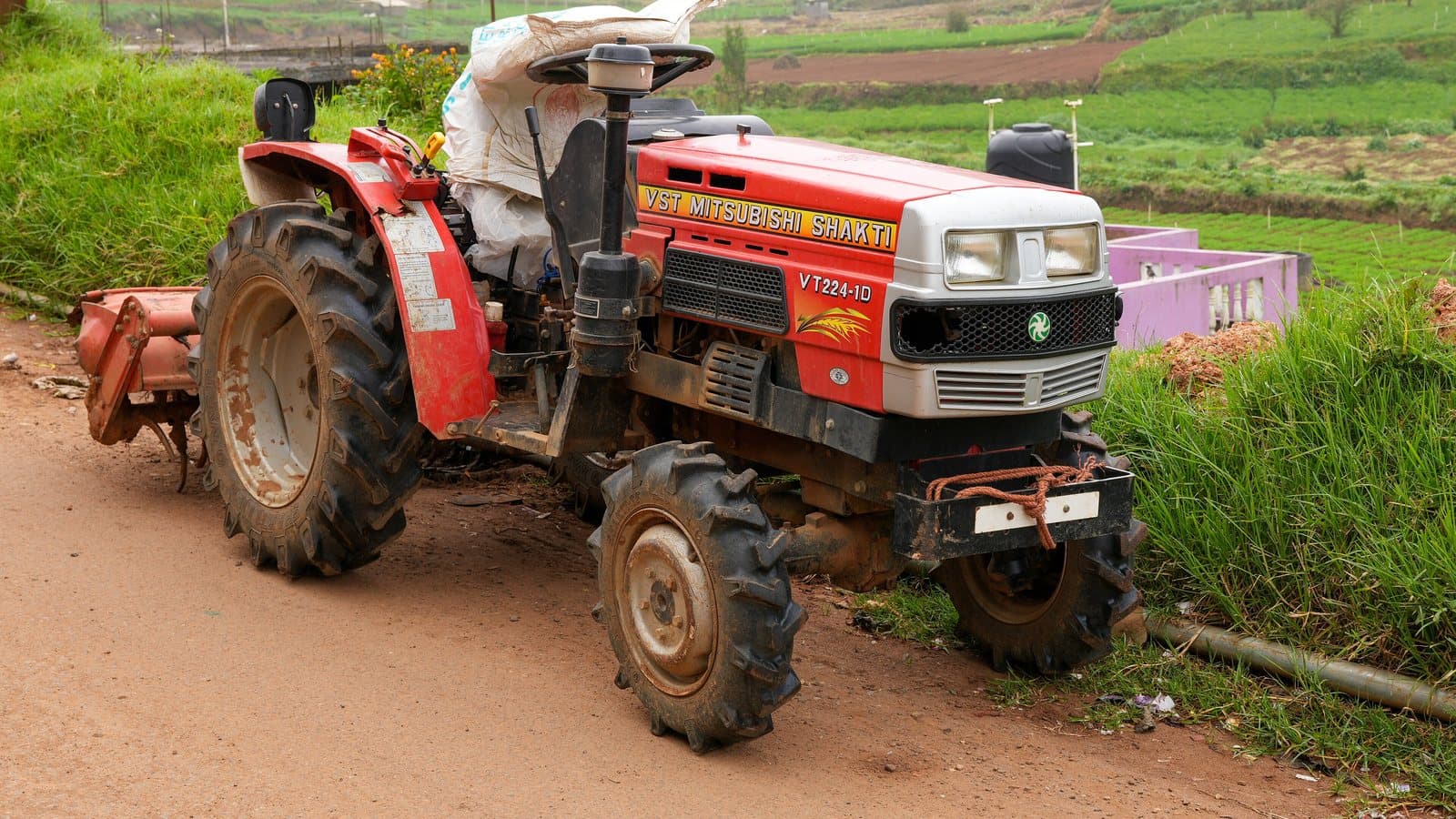
How IS 19262 relates to IS 5994
The PIB release says IS 19262:2025 "draws technical assistance from IS 5994: 2022 'Agricultural tractors — Test code' and relevant Automotive Industry Standards developed for electric vehicles, suitably adapted for agricultural applications".[1]
So the electric code has two parents:
- IS 5994:2022, the tractor test code. This gives the farm-performance side: PTO, drawbar, belt and pulley, and the test conditions that make results comparable across tractors.
- Automotive Industry Standards (AIS) for electric vehicles. These give the electric side, adapted to a machine that works in a field rather than on a road. The release does not name which AIS documents are used, so neither do we.
The diesel tractor standards behind each test
In the diesel world, each of the headline tests has its own supporting Indian Standard in the BIS FAD 11 family:[2]
| Test area | Supporting standard (FAD 11 list) |
|---|---|
| PTO power | IS 12036:1995, Agricultural tractors — Test procedures — Power tests for power take-off |
| Drawbar power | IS 12226:1995, Agricultural tractors — Power tests for drawbar — Test procedure |
| Hydraulic power and lift | IS 12224:1987, Method of test for hydraulic power and lifting capacity of agricultural tractors |
| Performance characteristics | IS 12207:2008, Agricultural tractors — Recommendations on selected performance characteristics |
| Whole-body vibration | IS 13548:1992 / ISO 5008:1979 |
| Seat vibration | IS 13581:1993 / ISO 5007:1990 |
| Noise | IS 12180 (Parts 1 and 2):2000 |
We list these because they are the family IS 19262 grew out of. We have not verified which of them the electric code cites directly. Check the normative references in your copy of IS 19262:2025.
How the code fits the tractor testing regime
IS 19262 slots into a tractor testing process that was streamlined in 2022. That year the Ministry cut the time limit for tractor testing from nine months to 75 working days, under revised guidelines issued to CFMTTI Budni from 15 August 2022.[3] Trade coverage describes that regime as four mandatory performance tests: PTO, hydraulic, drawbar and brake.[4] That is a secondary source, and we would confirm the current list with CFMTTI Budni before relying on it.
The PIB summary of IS 19262 names PTO and drawbar but does not mention hydraulic or brake performance. Because the summary uses "including… etc.", it is not a complete list, so don't read anything into what it omits. Ask the institute which tests your electric model will go through.
What the code leaves for later
What the release does not cover is as useful to know as what it does:
- No published pass marks. These are expected to come later, as described above.
- No battery, runtime or charging figures in the summary. If the full standard has clauses on these, they are in the text, not in the release.
- No conformity assessment scheme yet. The release expects one to develop out of test data gathered under the code.[1]
For early electric tractor makers this is good news. Today's test reports will feed into tomorrow's acceptance criteria, so a well-prepared machine tested now helps set the benchmark.
Voluntary, but you will probably still need a report
The release calls the standard voluntary.[1] The obligation to test comes from elsewhere. Under SMAM, testing at an FMTTI or designated DAC&FW centre is mandatory before supply under Government assisted programmes for machinery costing more than ₹35,000, and only tested equipment is eligible for subsidy.[5] We cover the subsidy side in Electric tractor subsidy: the test report comes first.
Using the code before you apply
- Buy IS 19262:2025 and IS 5994:2022 from BIS and read them together.
- Run your own PTO and drawbar trials against the code's conditions before the institute does. If your figures and the institute's differ, it is better to find out on your own test bed.
- Write your specification sheet with verification in mind. Every declared figure is something the institute can check.
- Ask the institute which tests apply to your model and in what order. It is a short conversation that saves a lot of rework.
Reading a new standard against a real machine and a real application is the work test process guidance covers. AgPro does not test tractors; CFMTTI Budni's engineers do. We help you arrive prepared.
Sources
- Union Minister Shri Pralhad Joshi released Indian Standard for Electric Agricultural Tractor (IS 19262:2025) — Press Information Bureau, Ministry of Consumer Affairs, Food & Public Distribution, December 28, 2025
- FAD 11 — Agricultural Tractors and Power Tillers: list of Indian Standards — SRFMTTI, Garladinne (retrieved 14 September 2026)
- Time limit slashed for the testing process of tractors used for farming — Press Information Bureau, Ministry of Agriculture & Farmers Welfare, August 5, 2022
- Tractor Testing in India: Ensuring Performance and Safety (secondary source) — TractorKarvan
- Guidelines of Sub-Mission on Agricultural Mechanization (SMAM), revised 2020-21 — Department of Agriculture & Farmers Welfare
Frequently asked questions
- IS 19262:2025 is the Bureau of Indian Standards test code titled 'Electric Agricultural Tractors — Test Code'. It sets uniform terminology, general guidelines and test methods for electric agricultural tractors. It was released on National Consumer Day 2025, and the PIB release announcing it is dated 28 December 2025.
- IS 5994 is the test code for agricultural tractors in general. IS 19262:2025 draws technical assistance from IS 5994:2022 and from the Automotive Industry Standards written for electric vehicles, adapted for farm use. The core performance tests (PTO power, drawbar power, belt and pulley) are shared, so electric and diesel results can be compared. The electric-specific content comes from the EV standards.
- No. The BIS release describes the notification of the standard as voluntary. A test report is still effectively required where you want subsidy or Government programme supply eligibility, because SMAM makes FMTTI testing mandatory before supply for machinery costing over ₹35,000.
- The BIS release positions it as a test code. It says the data generated will assist in the future development of acceptance criteria and conformity assessment schemes specific to electric tractors. Confirm any acceptance requirement for your model with the testing institute.
- Indian Standards are sold through the Bureau of Indian Standards' own standards store. We recommend buying the full text before finalising a design, because the PIB summary does not list every clause.