Rotavator Testing at FMTTI
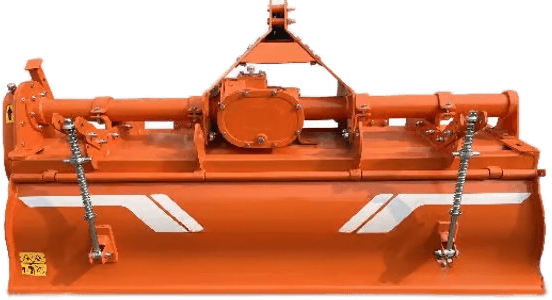
Tractor-drawn implements like rotavators, cultivators, harrows and ploughs have their own dedicated line in FMTTI's official testing-charge schedule. AgPro guides rotavator testing end to end; the test itself is conducted by Regional FMTTIs.
What the test evaluates
- Soil-working performance (tilling depth, width, uniformity)
- Durability under sustained field use
- Power/draft requirement from the towing tractor
- Structural integrity of tines, blades and frame
FMTTI test reference & related standards
| Body / Standard | What it covers |
|---|---|
| FMTTI | Performance & durability test procedure for tractor-drawn implements. |
Testing charges and validity for rotavators, cultivators and ploughs
Rotavators, cultivators, harrows and ploughs fall under FMTTI's "tractor drawn/operated implements" category — a distinct line in the official schedule, separate from tractor type-approval itself.
Testing charges
The official testing charge for this category is ₹2,07,357, exclusive of GST. That figure applies to tractor drawn/operated implements broadly — rotavators, cultivators, harrows and ploughs are grouped together under it rather than priced individually.
Report validity
An ICT report for this category is valid for 7 years, followed by a 5-year Batch Test validity for each subsequent batch — a longer initial window than tractors or power tillers get, in line with how tractor-drawn implements are tested and how infrequently their core design tends to change between batches.
Sample size
Outside of tractors, power tillers and combine harvesters (which have their own dedicated sampling rules), sample size for this category scales with unit cost: 20 units for machinery costing up to ₹35,000, 10 units for ₹35,000–₹1,00,000, and 5 units for anything costing ₹1,00,000 or more.
Read a real rotavator test in detail
We've worked through a released Initial Commercial Test report for a tractor-mounted, PTO-operated rotavator in a series of guides:
- The minimum performance criteria a rotavator must meet — 10 cm depth of cut, 12 cm puddle depth, 75% field efficiency, 65% puddling index, with the values a real machine recorded
- Which IS codes apply to a rotavator test — five standards, and the dedicated one that isn't applied in full
- Blade hardness, chemistry and wear — including a third of blade width lost in 26 hours of dry-land work
- "Does not conform" — and still passed — the evaluative/non-evaluative split
- What's inside the report, section by section
- Applicant vs manufacturer — who actually applies, and why it matters
Where AgPro fits in
Confirming the right regional FMTTI, preparing the technical drawings, operational manual and parts catalogue an application needs, and providing guidance, consultation and information through to the Final Test Report — that's where AgPro Consulting helps manufacturers and dealers. The physical test — soil-working performance, durability, draft requirement, structural integrity — is always conducted by FMTTI's own engineers, at the institute. AgPro's role is guidance, not testing.
Frequently asked questions
- No — rotavators, cultivators, harrows and ploughs fall under FMTTI's separate 'tractor drawn/operated implements' category, with its own testing-charge line and procedure, distinct from tractor type-approval.
- ₹2,07,357 for FY 2025-26, exclusive of GST — the line covering tractor drawn/operated implements such as rotavators, cultivators, harrows and ploughs. Confirm the live figure with your institute before budgeting.
- 7 years on the Initial Commercial Test and 5 years on a subsequent Batch Test, as a tractor-operated implement. A released report we reviewed, issued in September 2021, printed its validity as 31 August 2028.
- Minimum 10 cm depth of cut in dry land, minimum 12 cm puddle depth in wet land, minimum 75 percent field efficiency and minimum 65 percent puddling index — all evaluative, so a machine that misses one does not meet the criteria.