Paddy Transplanter Testing at FMTTI
Paddy transplanters have a purpose-written BIS test code, IS 18718:2024, and sit at the joint-highest fee line in the FMTTI schedule. AgPro guides paddy transplanter testing end to end; the test itself is conducted by CFMTTI Budni and regional FMTTIs (self-propelled machinery).
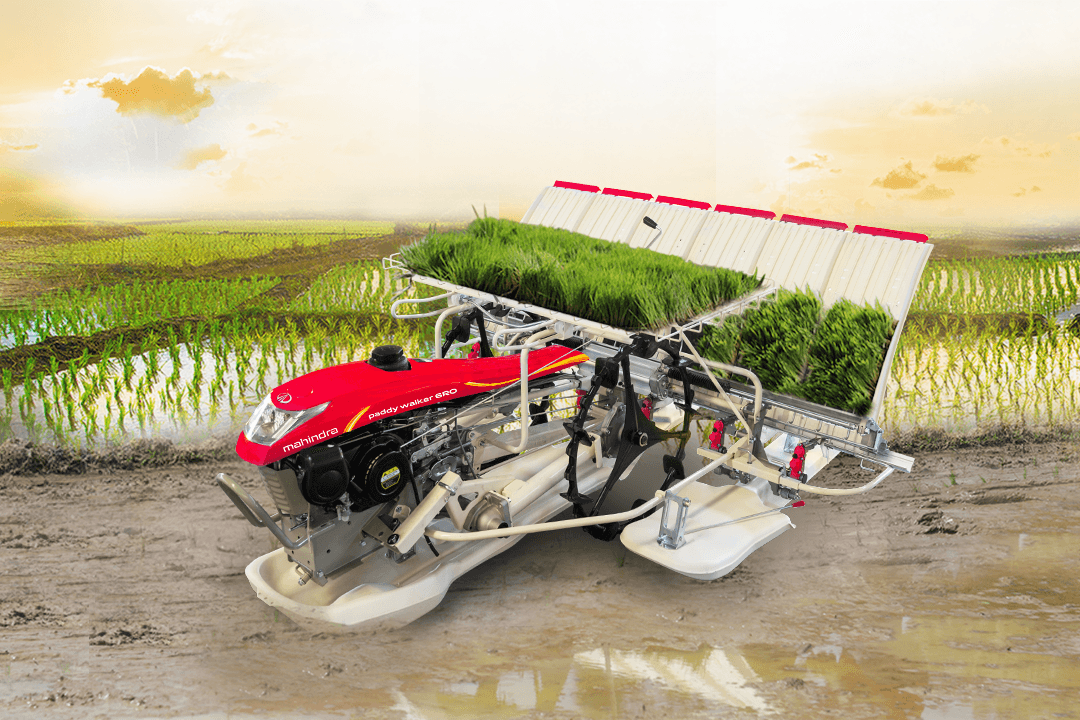
What the test evaluates
- Transplanting accuracy, seedling spacing and number of seedlings per hill
- Transplanting faults — missed hills, floating, buried and damaged seedlings
- Field capacity, field efficiency, working width and wheel slippage
- Planting depth and uniformity of transplanting
- Engine power, torque, fuel consumption and endurance
- Safety: guards, exhaust position, vibration, noise, turning ability and parking brake
FMTTI test reference & related standards
| Body / Standard | What it covers |
|---|---|
| IS 18718:2024 | Paddy Transplanter — Test Code and Recommendations on Selected Performance Characteristics. Covers engine-driven walk-behind and riding types, for mat/tray-type and root-washed seedlings. |
| FMTTI test procedure | Testing is carried out against the relevant Indian Standard, with test codes issued centrally so every institute runs the same procedure. |
What transplanter testing costs, needs and measures
Paddy transplanters are one of the few categories on this site with a test code written specifically for them, and one of the most expensive categories to put through an FMTTI institute. Both facts are worth planning around before a machine is crated.
Why the fee sits where it does
At ₹2,96,783 a paddy transplanter costs more to test than a tractor-drawn implement like a rotavator or cultivator, which sits at ₹2,07,357. The difference is scope rather than complexity for its own sake: a self-propelled machine carries an engine test, a full field test and a safety assessment, where an implement's test is narrower.
Only one other line in the schedule matches it — ride-on self-propelled tool bars, at the same ₹2,96,783. GST is charged on top, and the schedule is revised periodically, so confirm the live figure with your target institute before committing a budget.
The sample is five machines
Machinery costing ₹1,00,000 and above is drawn at five units. For a transplanter that is real inventory committed for the duration of the test, and it is the part manufacturers most often underestimate when planning a testing window around a production run or a scheme deadline.
What IS 18718:2024 measures
The code covers engine-driven walk-behind and riding-type transplanters, planting either mat/tray-type or root-washed seedlings. It spans the whole machine, not just the planting mechanism:
- Transplanting quality — assessed as faults: missed hills, floating seedlings, buried seedlings and damaged seedlings. The code prescribes limits for these.
- Placement — planting depth, seedling spacing, number of seedlings per hill, seedling distribution and overall uniformity.
- Field performance — transplanting and operating speed, effective working width, field capacity, field efficiency and wheel slippage.
- Engine — maximum power, torque characteristics, fuel consumption, operating temperatures and endurance.
- Safety — guards on moving parts, exhaust positioning, operator controls, protection against hot or rotating components, signage, vibration, noise, turning ability and parking brake performance.
- Marking — manufacturer name, model, year of manufacture, engine serial number, power rating and fuel consumption data.
Field efficiency is the ratio of actual field capacity to theoretical field capacity, expressed as a percentage — theoretical capacity following from working width and speed, actual capacity being what the machine achieves once turning and tray refilling are counted.
Scheme supply means testing
Being self-propelled removes an option that lower-cost implements have. Testing is mandatory for machinery costing more than ₹35,000 before supply under a Government assisted programme, and the below-threshold route where a State Government may accept self-certification explicitly excludes all self-propelled machinery — whatever it costs. At a transplanter's price point the threshold question never arises anyway.
If your route to market runs through a state scheme, a subsidy list or a government tender, the test is a precondition rather than a differentiator.
Before you apply
Self-propelled machines are routed by machine category rather than by your address, so confirm the institute before applying rather than defaulting to your regional one. Have the technical drawings and specifications, the full operational manual, a parts catalogue, a workshop manual and photographs ready — an incomplete set is the most common reason an application bounces at scrutiny, costing a cycle before testing is even scheduled.
Frequently asked questions
- Yes — IS 18718:2024 is written specifically for paddy transplanters. That puts them ahead of several categories that still have no purpose-written code and are tested against the closest available standards instead.
- Self-propelled paddy and vegetable transplanters sit at ₹2,96,783 in the FY 2025-26 schedule, exclusive of GST — the joint-highest line in the whole schedule. Confirm the live figure with your institute before budgeting.
- As self-propelled machinery, 5 years on the Initial Commercial Test and 5 years on a subsequent Batch Test. Machinery costing ₹1,00,000 and above is drawn at 5 units.