Combine Harvester Testing at FMTTI
FMTTI institutes test combine harvesters and other self-propelled machines for real-world field performance, not just component specifications. AgPro guides combine harvester testing end to end; the test itself is conducted by CFMTTI Budni and regional FMTTIs (self-propelled machinery).
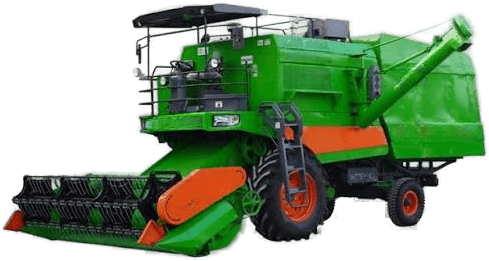
What the test evaluates
- Threshing and separation efficiency, including grain loss under varying crop conditions
- Field capacity and effective output per hour
- Fuel consumption under load
- Structural durability and safety-guard compliance
- Operator ergonomics and control accessibility
FMTTI test reference & related standards
| Body / Standard | What it covers |
|---|---|
| FMTTI / CFMTTI | The primary institutional performance & endurance test procedure for harvesters. |
| RNAM test protocol | Regional test methodology FMTTI references for field-performance evaluation. |
| BIS | National product and safety standards that work alongside FMTTI's own test procedure. |
Report validity, sample size and process for combine harvesters
Combine harvesters and other self-propelled machinery are tested for real field performance — threshing efficiency, grain loss, field capacity — rather than just component specifications, and that shows up in how long a report stays valid and how the sample is drawn.
Report validity
A combine harvester's Initial Commercial Test (ICT) report is valid for 7 years, followed by a 5-year Batch Test validity for each subsequent batch. That's a notably longer initial window than tractors or power tillers get, reflecting the more extensive field-performance testing this category goes through upfront.
Sample size
Combine harvesters have their own dedicated sampling rule: 3 units are selected for test — smaller than most other categories, in line with the practical difficulty and cost of sourcing and transporting multiple full-size combine harvesters for testing.
Testing charges
Self-propelled machinery of this scale doesn't sit on the general per-category schedule the way smaller tractor-drawn implements do — CFMTTI Budni and the regional FMTTIs quote combine-harvester testing on a case-by-case basis depending on the specific machine and scope of test. Confirm the applicable charge directly with the relevant institute before budgeting.
Where AgPro fits in
Working out which institute to route a combine harvester through, and what documentation the application needs, isn't always straightforward. AgPro Consulting guides manufacturers and dealers through that process — confirming the right institute, preparing documentation, and providing guidance, consultation and information on scheduling. The physical test — threshing and separation efficiency, field capacity, structural durability, operator ergonomics — is always conducted by FMTTI's own engineers, at the institute. AgPro's role is guidance, not testing.
Frequently asked questions
- Many state and central procurement schemes require an institutional test report — AgPro helps confirm what your specific tender requires.
- No — testing is always carried out by the notified institute (FMTTI/CFMTTI). AgPro provides guidance, consultation and information on documentation and compliance around it.
- 7 years on the Initial Commercial Test and 5 years on a subsequent Batch Test — longer on the ICT side than tractors and power tillers, which get only 3 years.