Power Weeder FMTTI Testing: Process, Fee and Documents
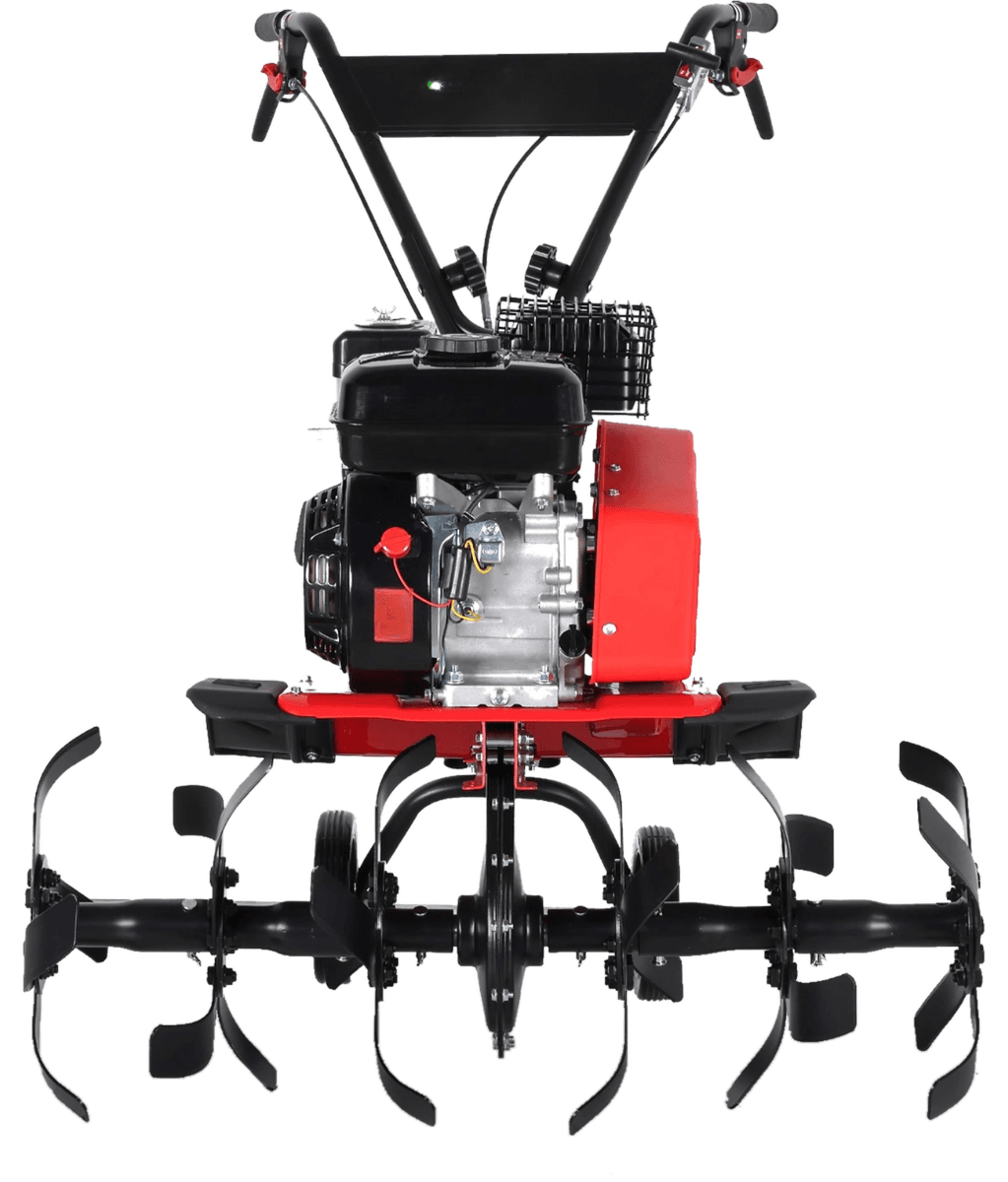
If you make, import or distribute power weeders and you're trying to work out what FMTTI testing actually involves — not just "which office do I send it to," but what it costs, how many units go in, and how long the report is good for — here's the practical answer.
Why power weeder testing matters
A power weeder is one of the implements most frequently bought through state farm-mechanization subsidy schemes, and most of those schemes tie the subsidy to a valid test report from an FMTTI or another government-identified testing centre. So the practical trigger for most manufacturers isn't "is testing required by law" in the abstract — it's "does my buyer's subsidy scheme or tender require it," and for power weeders the answer very often is yes.
It's also not just a paperwork formality. In real, published Initial Commercial Test reports for power weeders that we've reviewed, testing has caught genuine issues — rotor blade thickness measuring under the required minimum, blade chemical composition falling outside the specified carbon/silicon/manganese range, and handle-and-control vibration levels flagged as high enough to affect operator comfort and safety. None of that stopped the machine from eventually being approved, but it's exactly the kind of defect a manufacturer would rather catch through testing than through a field complaint. That's the practical case for testing even outside a subsidy context: it's one of the few genuinely independent performance and safety checks a dealer or institutional buyer can point to.
What power weeder FMTTI testing costs
Power weeders are grouped with power tiller-drawn/self-propelled reapers under one fee line in the official testing-charge schedule, currently ₹1,21,961 for FY 2025-26. That figure is exclusive of GST, which is charged on top. The schedule itself is revised roughly every couple of years, so treat this as the current rate rather than a permanent one — always confirm the live figure with your target institute before you commit to a budget or a subsidy application timeline.
How many units you'll need to send in
This is worth getting right rather than assuming, because two different rules can look like the answer and aren't. FMTTI's testing regulations describe submitting a test sample for a Commercial Test — the wording doesn't fix one number for every machine. Separately, there's a price-tied sampling rule (20 / 10 / 5 units depending on declared price) that governs batch quality-checks on machines already in commercial production and being supplied under a government scheme — that's a different stage of the process from your first test submission, and it isn't the number you plan around when you're first sending a power weeder in to get tested.
In practice, manufacturers generally submit 5 units for a power weeder test. Treat that as the working norm, but confirm the exact figure with your target institute before you commit units to shipping — it's cheap to check and expensive to guess wrong.
How long the test report stays valid
Power weeders aren't named in the general category-wise validity table, so rather than guess at a classification, here's what real reports actually show: an Initial Commercial Test report we reviewed from 2020 carried a 5-year validity (tested and released mid-2020, valid to mid-2025), while a more recent one from 2025 carried a 7-year validity (tested and released early 2025, valid to 2032). Both are genuine, government-issued Commercial Test reports for power weeders — the difference comes down to which Ministry circular governed validity at the time each test was conducted, not an inconsistency in the machines themselves.
The practical takeaway: don't assume a number. Your report will state its own validity date on the cover page — that's the figure to plan your renewal around, not a generic table.
Documents to have ready before you apply
Before you register on the Agri-Machinery Portal and submit an application, have these ready:
- Detailed technical drawings and specifications
- A full operational/instruction manual
- A parts catalogue
- Photographs of the machine
Incomplete documentation is the single most common reason an application gets sent back for correction, which resets your place in the queue — it's worth getting this right the first time.
There's no dedicated test standard for power weeders
This is worth knowing going in, because it explains why test reports for power weeders reference several different Indian Standards rather than one. There's no IS test code written specifically for a self-propelled power weeder. Institutes fill that gap by testing against the closest available standards:
- IS 9935 — the Power Tiller test code, for engine performance and general test procedure
- IS 9980 — guidelines for field performance and haulage tests of power tillers
- IS 1976 — the specification for a manually-operated rotary paddy weeder
- IS 6690 — the specification for rotavator blades, used to check your rotor blades' hardness and material composition
On top of those borrowed standards, a separate Ministry circular sets out critical technical specifications specifically for power weeders — a pass/fail checklist covering working width (typically expected in the 300-1500mm range), engine type, blade material and thickness, blade hardness, number and shape of rotor blades, and required safety provisions: an emergency stop, a shield to stop mud and stones flying off the rotor, a depth control mechanism, and a cover directing exhaust away from the operator. Your machine gets checked against this list item by item, and each one is marked as conforming or not.
What the test actually measures
A power weeder ICT is a genuinely thorough physical test, not a paperwork review. Based on real, published test reports, here's what actually happens to the machine:
- Engine performance — run on a dynamometer to measure power, torque and fuel consumption across a range of speeds and loads, under both normal and high-ambient conditions.
- Mechanical vibration — measured at the steering handle, clutch lever, fuel tank, gear shifting lever and other control points, since excessive vibration is a real operator health and comfort concern, not a cosmetic detail.
- Noise — measured at the operator's ear and at a bystander's position, at rated engine speed.
- Turning ability — minimum turning diameter and clearance diameter, measured on both sides.
- Blade hardness and chemical composition — the rotor blades are checked against the required hardness range and, separately, sent for chemical composition analysis (carbon, silicon, manganese, sulphur, phosphorous content) to confirm they're made of the specified material.
- Field performance — run in an actual field for multiple test runs, measuring depth of cut, width of cut, forward speed, area covered per hour, fuel consumption per hectare, and — the two numbers that matter most to a buyer — field efficiency and weeding efficiency (weed count before and after operation). In real reports we've reviewed, these have landed anywhere from the high-60s to low-90s percent, depending on the machine and soil conditions.
- Teardown and wear inspection — after all of the above, the engine and rotary assembly are dismantled and measured for wear (cylinder bore, piston, rings, bearings) against permissible limits, to confirm nothing degraded beyond acceptable tolerances during the test.
Any shortfall against a requirement — a blade slightly under the minimum thickness, vibration on the high side, blade material outside the specified composition — gets recorded as a finding, and the applicant is asked to respond with corrective action for future production. It doesn't necessarily block the report, but it's on the record.
The application-to-report process
The workflow runs entirely through the Agri-Machinery Portal, and it's the same sequence for a power weeder as for any other machinery category:
- You register and submit an online application.
- It's scrutinised, and any discrepancies are sent back for you to correct.
- Once the corrected application is approved, you upload the fee receipt.
- The institute allocates a test officer and test period by random sampling.
- You send the selected equipment for testing.
- The Test Engineer runs the test, uploads results, and prepares a Draft Test Report (DTR).
- You get a chance to comment on the DTR before the Test Engineer prepares the Final Test Report (FTR).
- You receive the FTR.
SMS and email alerts go out automatically at every stage, so you shouldn't need to chase status updates manually — though in practice, active follow-up still shortens real-world turnaround.
Commercial test or Confidential test?
Most power weeder applications are a Commercial Test — the standard route for a machine that's already in, or ready for, commercial production. A Confidential Test exists for a prototype you're not ready to disclose publicly yet, and it's priced roughly 10% higher than the equivalent Commercial Test. Unless you have a specific pre-launch confidentiality reason, Commercial is the one you want — and if you do start confidential, you're not locked in: a real power weeder application on record was submitted as confidential and later converted to commercial on the applicant's written request, once they were ready to publish the result.
Which institute will test your power weeder
There's no tractor-style national exception here — for power weeders, the standard regional rule applies. Your state generally determines which of the four FMTTIs, or which of the 38 additional identified testing centres, is the right one to apply to. If you're unsure which of the network's 42 approved bodies covers your state, see our guide to choosing the right FMTTI institute — the same regional logic covered there applies directly to power weeders.
If you'd rather not track fee revisions, sampling rules and portal status updates yourself, that's exactly what we handle for manufacturers, dealers and buyers — including tying the report into a subsidy application where that's the goal.
Frequently asked questions
- It's mandatory whenever you need subsidy eligibility under a scheme like SMAM, or a tender specifically requires it. Outside those cases it's optional — though a test report is still the strongest performance proof you can show a dealer network or government buyer.
- Power weeders fall under FMTTI's "power tiller-drawn/self-propelled reaper, power weeder" fee category, currently ₹1,21,961 for FY 2025-26, with GST charged separately. This schedule is revised periodically, so confirm the current rate with your target institute before budgeting.
- In practice, manufacturers generally submit 5 units for a power weeder test. The regulations themselves speak of submitting a test sample rather than fixing one number for every case, and a separate price-tied sampling rule applies to batch quality-checks after approval, not your initial submission — so treat 5 as the practical norm and confirm the exact count for your situation with the target institute.
- Power weeders aren't named in the general category-wise validity table, but real Initial Commercial Test reports we've reviewed have carried validity periods of both 5 years and 7 years — it depends on which Ministry circular was in force when the test was conducted. Check the validity date printed on your specific report rather than assuming a fixed number.
- The same regional rule applies as for most other machinery — generally whichever of the four FMTTIs, or the 38 additional identified testing centres, covers your state. Power weeders don't get a tractor-style national routing exception.
- No. There's no IS test code written specifically for self-propelled power weeders. Institutes test against the closest available codes instead — the Power Tiller test code (IS 9935) and its field-performance/haulage guidelines (IS 9980), the manually-operated rotary paddy weeder spec (IS 1976), and the rotavator blade spec (IS 6690) for blade hardness and material. A separate Ministry circular on critical technical specifications adds power-weeder-specific pass/fail checks on top of those — working width, blade thickness and hardness minimums, and required safety provisions.
- Engine performance (power, torque, fuel consumption) on a dynamometer, mechanical vibration at the handles and controls, noise level at the operator's ear, turning ability, rotary blade hardness and chemical composition, full field performance (weeding efficiency, field efficiency, fuel consumption per hectare), and a complete teardown afterwards to measure wear on the engine, blades and bearings against permissible limits.
- No. AgPro provides guidance, consultation and information on the process on your behalf — documentation, scheduling, liaison and compliance interpretation. The physical test is always conducted at the government institute, by its own engineers.