FMTTI Testing for Paddy Transplanters: What IS 18718:2024 Covers
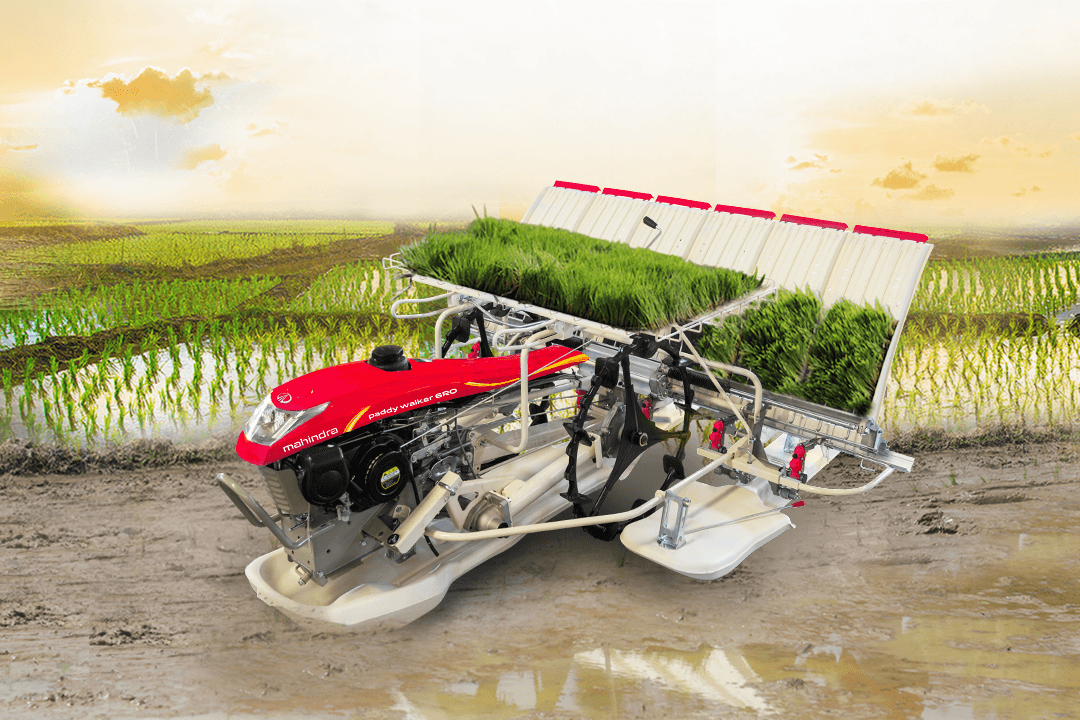
Paddy transplanters have quietly become one of the more interesting machine categories to get tested, for a reason that has nothing to do with the machine itself: they now have a test code written specifically for them.
IS 18718:2024 — Paddy Transplanter — Test Code and Recommendations on Selected Performance Characteristics — is a Bureau of Indian Standards code covering engine-driven walk-behind and riding-type transplanters, for both mat or tray-type and root-washed seedlings.
Why a dedicated code matters more than it sounds
FMTTI's engineers don't invent a test procedure for each machine that arrives. Testing is carried out against the relevant Indian Standard for that machine, and where no Indian Standard exists, against another relevant international standard instead, with test codes issued centrally so every institute runs the same procedure.
That fallback is where ambiguity creeps in. Our power weeder guide is the clearest example on this site: there is no IS code written for power weeders, so institutes test them against the closest available standards — the power tiller code, a rotary paddy weeder spec, a rotavator blade spec — plus a Ministry circular of category-specific checks layered on top. It works, but a manufacturer cannot read one document and know exactly what the machine will face.
Paddy transplanters are no longer in that position. IS 18718:2024 is the document, and the parameters below are what it addresses.
What IS 18718:2024 evaluates
The code spans the machine as a whole rather than just its planting mechanism.
Field performance. Transplanting speed and operating speed, effective working width, field capacity, field efficiency, wheel slippage, planting depth, seedling spacing, number of seedlings per hill, seedling distribution, transplanting accuracy and overall uniformity of transplanting.
Field capacity and field efficiency are the two that manufacturers most often quote loosely in sales material, and the code defines them rather than leaving them to interpretation: field efficiency is the ratio of actual field capacity to theoretical field capacity, expressed as a percentage. A machine's theoretical capacity follows from its working width and speed. Its actual capacity is what it achieves once turning, refilling seedling trays and other unavoidable interruptions are counted. The gap between the two is the number that matters in a field, and it is the one a test report will put a figure against.
Transplanting quality. This is the section specific to the crop, and it is assessed as faults rather than as a single score — missed hills, floating seedlings, buried seedlings and damaged seedlings. The code prescribes limits for these.
Engine performance. Maximum power output, torque characteristics, fuel consumption, operating temperatures, and endurance under varying conditions.
Safety. Guards on moving parts, safe exhaust positioning, adequate operator controls, protection against contact with hot or rotating components, and safety signage. Vibration measurement, noise assessment, turning ability and parking brake performance are evaluated alongside these.
Marking and documentation. The machine must carry manufacturer name, model, year of manufacture, engine serial number, power rating and fuel consumption data.
That last one is worth taking literally. Marking and documentation requirements are among the easiest things to get wrong and among the most avoidable reasons for a machine to be sent back before testing properly begins.
What FMTTI testing actually costs and takes
The standard tells you what will be measured. These are the practical figures around getting it done.
| Paddy transplanter | |
|---|---|
| Testing charge (FY 2025-26) | ₹2,96,783 for a self-propelled paddy/vegetable transplanter, exclusive of GST |
| ICT validity | 5 years (self-propelled machinery) |
| Batch Test validity | 5 years |
| Sample size | 5 units, for machinery costing ₹1,00,000 and above |
| Test code | IS 18718:2024 |
Two things stand out.
The fee is at the top of the schedule. ₹2,96,783 is the joint-highest line in the entire FY 2025-26 testing-charge schedule, level with ride-on self-propelled tool bars and well above the ₹2,07,357 charged for tractor-drawn implements like rotavators and cultivators. Transplanters are expensive to test because a self-propelled machine carries an engine test, a field test and a safety assessment rather than an implement's narrower scope. Budget accordingly, and note that GST is charged on top. The full schedule is here.
Five units, not one. Machinery costing ₹1,00,000 and above is drawn at five units under the sampling rules. For a machine in this price band that is real inventory committed for the duration of the test, and it is the part of the plan manufacturers most often underestimate.
Being self-propelled changes your obligations
This is the part worth being precise about, because it removes an option some manufacturers assume they have.
SMAM makes testing from an FMTTI or designated testing centre mandatory for agricultural implements, tools and machinery costing more than ₹35,000 before they are supplied under a Government assisted programme. Below that figure, the State Government runs its own quality system and may accept self-certification instead.
But that below-threshold route explicitly does not cover self-propelled machinery of any type. A self-propelled paddy transplanter is outside the relaxation regardless of what it costs — and at this price point the threshold question never arises anyway. If your route to market runs through a state scheme, a subsidy list or a government tender, the test is not optional. The SMAM eligibility guide covers how that connects to appearing on the published list.
Which institute, and what to have ready
Self-propelled machines are routed by machine category rather than by your address. CFMTTI Budni tests tractors, power tillers, combine harvesters and other self-propelled machines; SRFMTTI Garladinne tests power tillers and self-propelled machines and equipment; NRFMTTI Hisar covers self-propelled crop production equipment among its categories. Which one suits a given transplanter is worth confirming before you apply rather than assuming your regional institute by default — see how to choose the right FMTTI institute.
Before applying on the Agri-Machinery Portal, have ready:
- Detailed technical drawings and specifications
- A full operational/instruction manual
- A parts catalogue
- Photographs of the machine
Institutes also expect a workshop manual, and the application carries your postal address, email and phone. An incomplete set is the most common cause of an application bouncing back at scrutiny, which costs a cycle before testing has even been scheduled. The portal walkthrough covers the stages that follow.
What to do with this before you apply
If you build or import paddy transplanters, the practical sequence is short:
- Get the standard. IS 18718:2024 is the document your machine will be judged against. Read it before the machine is finalised, not after it is crated.
- Check the fault categories against your own field data. Missed hills, floating, buried and damaged seedlings are where a transplanter passes or struggles, and they are measurable on your own plots long before an institute measures them.
- Confirm the fee and the institute. Both the applicable charge and the right institute are worth a direct check rather than an assumption.
- Plan five units and a 5-year clock. Five machines committed to the test, and a report good for five years from its issue date.
Our paddy transplanter category page keeps the fee, sample size, validity and test-parameter list in one place. Working out which code applies, what the current fee actually is, and which institute takes a given self-propelled machine is the groundwork test process guidance exists to cover. AgPro doesn't run the tests — FMTTI's engineers do that, at the institute — but arriving with the right documents, the right sample count and a realistic budget is what keeps a transplanter moving through the process instead of waiting in it.
Frequently asked questions
- Yes. IS 18718:2024, 'Paddy Transplanter — Test Code and Recommendations on Selected Performance Characteristics', published by the Bureau of Indian Standards, covers engine-driven walk-behind and riding-type transplanters planting mat/tray-type or root-washed seedlings. That is a meaningful change: several machine categories still have no purpose-written code and are tested against the closest available standards instead.
- Self-propelled paddy and vegetable transplanters sit at ₹2,96,783 in the official FY 2025-26 testing-charge schedule, exclusive of GST. That is the joint-highest line in the whole schedule. Confirm the live figure with your target institute before budgeting, since the schedule is revised periodically.
- For a self-propelled machine, effectively yes wherever government scheme supply is involved. SMAM makes testing mandatory for machinery costing more than ₹35,000 before supply under a Government assisted programme, and it separately excludes all self-propelled machinery from the below-threshold state-discretion route — so cost does not provide a way around it.
- A self-propelled transplanter falls under the self-propelled machinery category, which carries 5 years on the Initial Commercial Test and 5 years on a subsequent Batch Test. Your own report states its validity date on the cover page — plan the renewal from that, not from a general rule of thumb.
- No. AgPro provides guidance, consultation and information on the process on your behalf — documentation, institute coordination, scheduling and compliance interpretation. The physical testing is always conducted at the government institute, by its own engineers.